Carolyn Commons
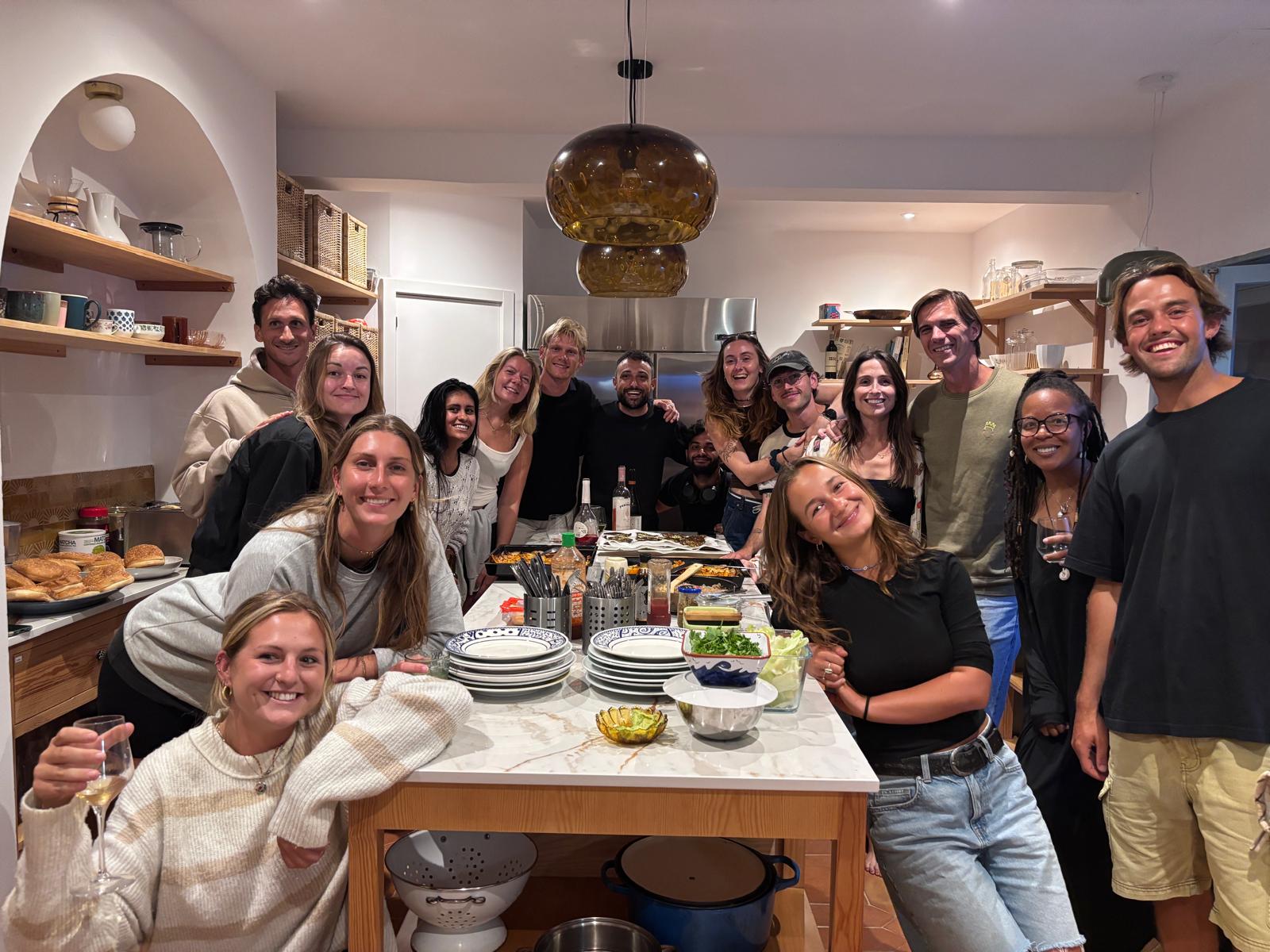
When I was designing the kitchen at Wild Souls, I had a pretty clear idea of what I wanted it to be. I grew up in a house where my mom and stepdad loved to cook — they built a kitchen big enough for the whole family to be in at once, friends and all, everyone bumping elbows while something good was happening on the stove. It was always where the evening ended up, whether that was the plan or not.
That's what I was trying to recreate. A kitchen that pulls people in.
What I didn't anticipate was the sourdough.

The Starter That Started Everything
Before Wild Souls opened last June, a close friend named Clotilde came to stay and help us set up — through the construction, the chaos, the long days of getting everything ready. She knew how much I love baking, and she decided — despite how slammed we both were — that we were going to make a sourdough starter from scratch. This was entirely her idea and her doing. I was hesitant. We had a coliving to open. But Clotilde insisted, and she was right to.
After a couple of weeks of trial and error — and more than a few dubious-smelling jars — the starter came alive. We spent the remaining weeks before opening experimenting with loaves, learning together, getting better batch by batch. When Clotilde left, she entrusted the starter to me. Not just to keep alive — to keep baking with.
So I did. Right as we opened, I was making bread nearly every day. And it quickly became clear this was not going to be a private project.
Guests started hovering near the kitchen when a loaf was in the oven. Asking when it would be ready. And then — once it was — stampeding the kitchen. A fresh loaf would be gone within minutes. The sourdough even made a cameo in our mini film festival later in the year, which tells you something about how central it had become to life here.
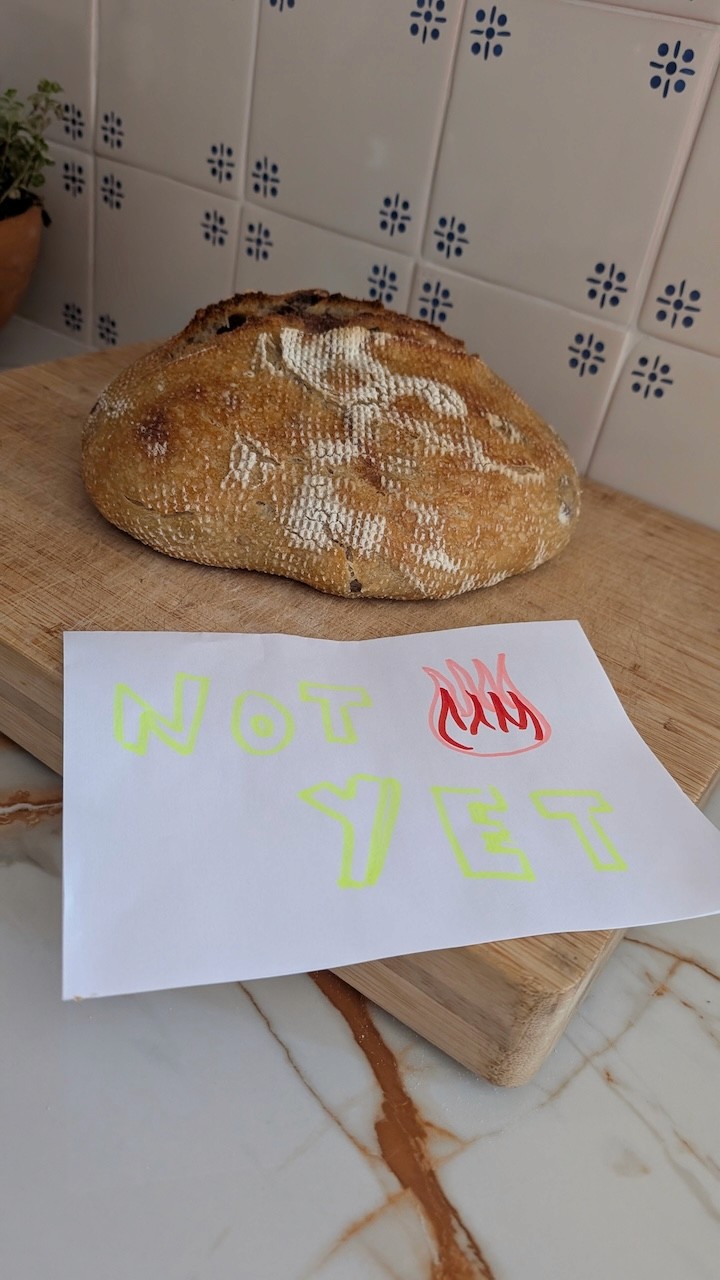
We had to create a sign to make sure people didn't cut into the sourdough before it was cooled enough.
We started running skill shares. I'd teach guests how to feed the starter, how to shape a loaf, what to listen for. We rotated who made the bread for the week. And inevitably, people fell in love with it and wanted to take some home.
Clotilde had already proved this was possible — she'd successfully traveled with starter all the way back to France. So we started multiplying. Making babies. Sending guests off with their own little jar of Wild Souls sourdough.
The most memorable recipient was Ella, a sustainable fashion designer from the Netherlands who stayed for six weeks last season and made bread for the whole house multiple times a week. She became so associated with it that at our Halloween party, she dressed as a sourdough — constructing a bra out of miniature baked loaves, complete with a matching sourdough purse and a chef's hat.
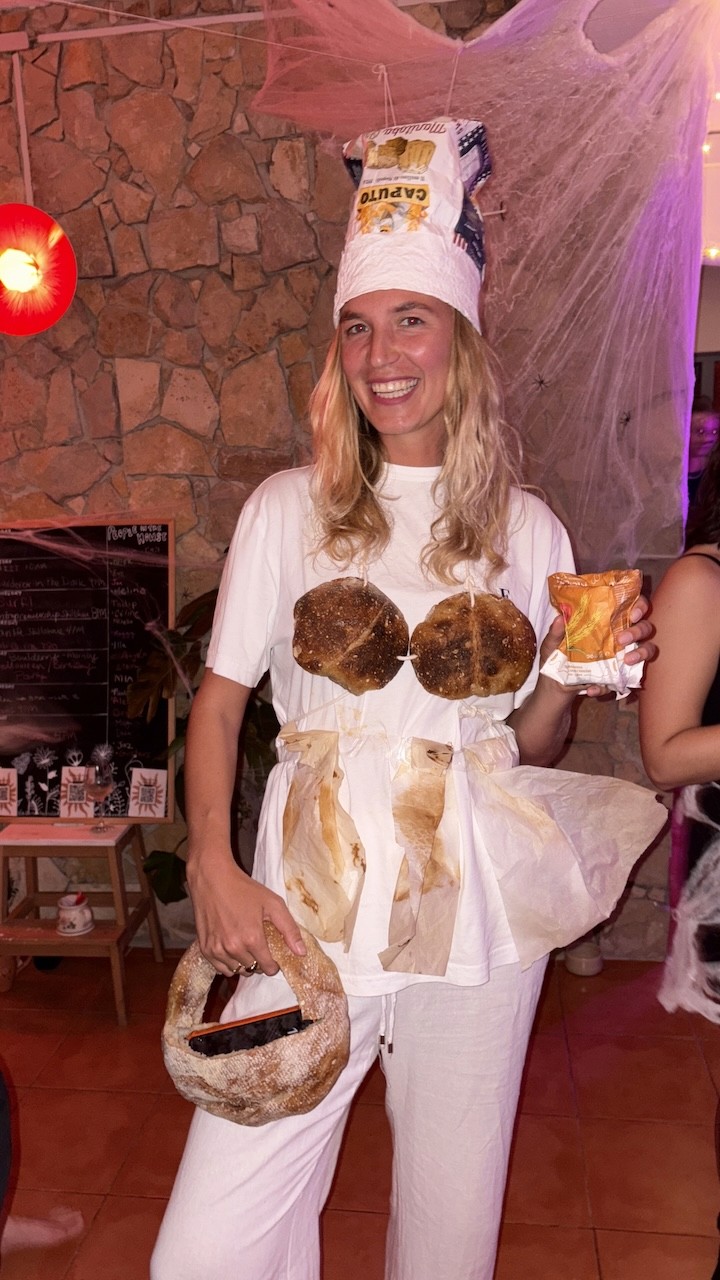
Some serious dedication to her Halloween costume.
A few weeks ago, I got a message from Ella: photos and videos of her teaching her friends back home to make bread with their share of the Wild Souls starter.
Which means our starter is now, technically, a sourdough grandmother. Her babies have had babies.
I didn't expect this when I nervously agreed to make the starter with Clotilde last spring. But it might be one of my favourite things Wild Souls has ever produced.
The First Family Dinner
We were nervous before our first proper family dinner. Not about the cooking — about whether people would actually get what we were trying to do. Whether strangers who'd just arrived would want to sit down and share a meal together.
Two of our first guests, both from Spain, quietly volunteered to make paella for the house. They'd never been to a coliving before. They had no blueprint for what a family dinner was supposed to look like. They just understood — instinctively — that cooking for people is an act of love.
They drove 45 minutes to the nearest Mercadona in the hopes of finding the specific Spanish fish stock you need for a proper paella. It wasn't there. So they bought whole shrimp and fish and made their own stock from scratch. Then they hit another problem: no saffron. Essential for paella. Almost impossible to find locally.
One of them — Daniel — came to ask me, almost apologetically, whether I might happen to have any. He clearly didn't expect me to. But I did: a precious little jar given to me by a dear friend from Afghanistan, the kind I keep for special occasions, that I use in cooking and teas.
I handed it over without a second thought.
That evening, the whole house sat down together for the most beautiful paella I've ever had. Everyone was beaming. The table was loud with conversation, with laughter, with the particular energy that happens when people stop being strangers.
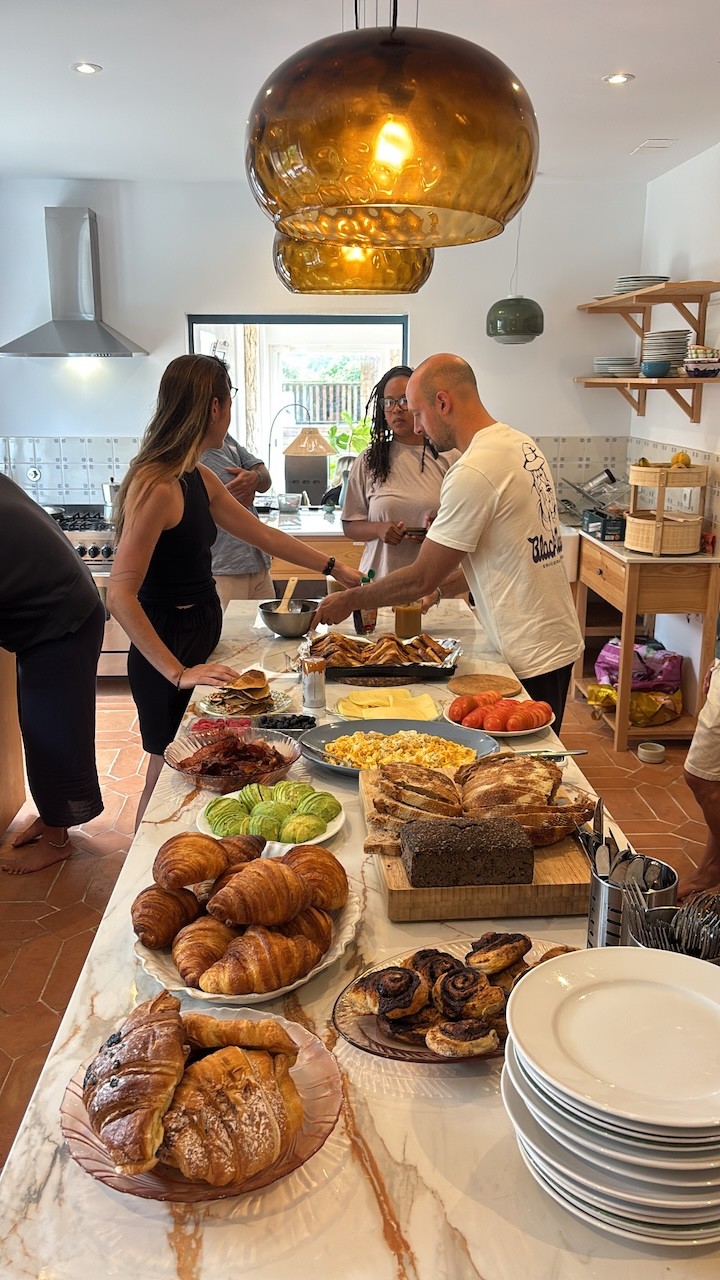
Family brunch this time. Gotta keep it fresh.
Nick and I looked at each other across the table. We didn't say much. We both just knew: I think Wild Souls is actually going to work.
That first dinner is why family dinners remain non-negotiable at Wild Souls. Not because we planned for them to matter this much. But because we saw, on that first night, exactly what they could become.
The Night Someone Invented the Shawarmarepa
Jen is from Lebanon. Dani is from Venezuela. They're a couple, living in Paris, and they arrived at Wild Souls and immediately threw themselves into everything — surf sessions, game nights, conversations that ran way too late.
After attending their first family dinner, they volunteered to host the next one. They wanted to do something that brought their two cultures together. And so the shawarmarepa was born: a Venezuelan arepa, stuffed with shawarma.
I'd never tried anything like it. Once I did, it seemed completely obvious — one of those combinations that makes you wonder why it doesn't already exist everywhere.
They turned the prep into a workshop. Everyone in the kitchen, learning how to make and cook arepas together. Then dinner became a party — people dancing in the kitchen, arepas being handed out all night, music everywhere. My family happened to be visiting that week. My nieces and nephews were wide-eyed at the whole scene.

Learning to make the arepa
The shawarmarepa is now on the unofficial Wild Souls menu. And Jen and Dani are the reason.
Why the Kitchen Is the Heart of This House
I built the Wild Souls kitchen deliberately large. Deliberately central. Growing up in my mom's house taught me that this is where it actually happens.
Everyone passes through a kitchen. You need coffee before you can work. You need lunch to get through the afternoon. Even guests on completely different schedules end up in the same room, reaching for the same kettle, at some point during the day. And there's something about the low-pressure nature of it — you're just making your dinner, you're not committing to a conversation — that makes it easier to actually connect. You can participate in whatever's happening, or just make your food and head off without obligation or awkwardness.
The guests who spent the most time lingering in the kitchen were always the ones who ended up most embedded in the community. Not because they were more outgoing. Just because they kept showing up in a room where showing up is easy.
We had a guest last season who spent months trying to catch a fish so we could make it for family dinner. He never caught one. It became a running joke, and then a kind of legend. We have a guest from Philadelphia who introduced the whole house to Philly cheesesteaks — a dish so specific that almost no one had ever tried one, and everyone was inexplicably delighted when she made them for the house.
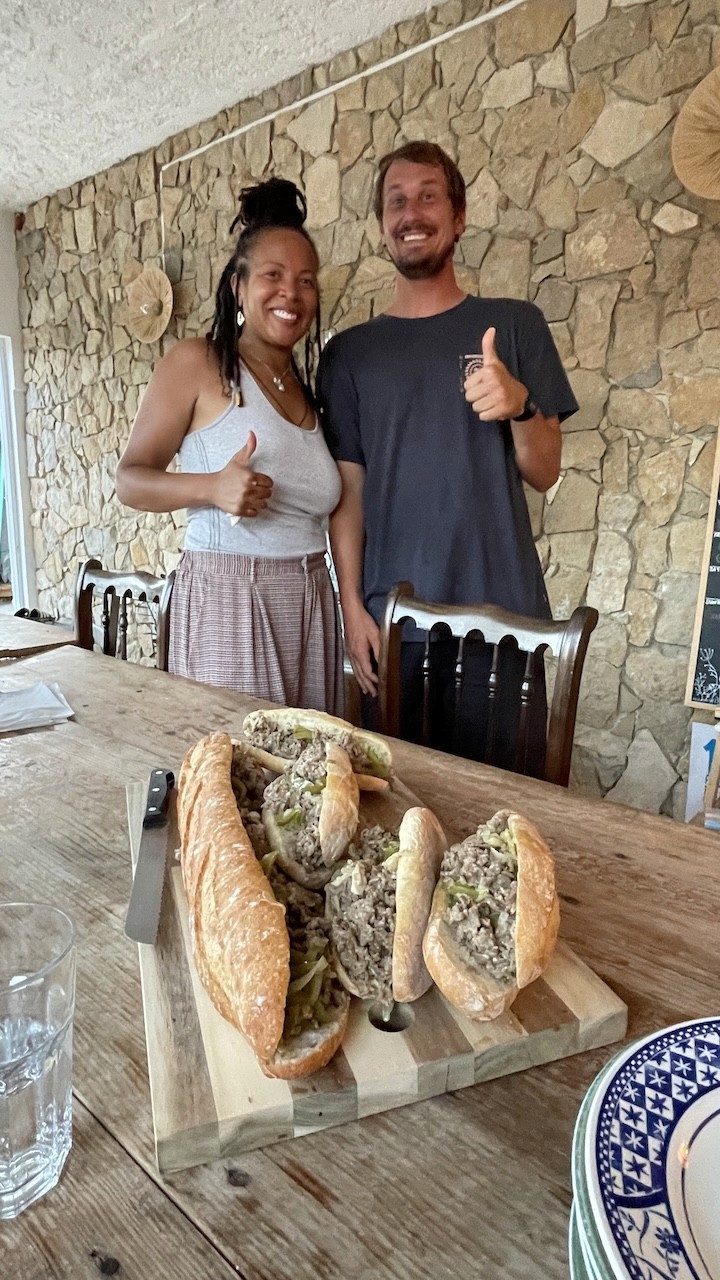
Philly cheesesteak chef and enthusiast.
I think what I'm trying to say is that the food is kind of beside the point. What actually happens in the kitchen is that people stop being guests and start feeling at home. And once that happens, everything else follows.
We just make sure there's always something good on the stove.
Frequently Asked Questions
Is it easy to meet people at a coliving if you're traveling solo? Yes — and the kitchen is a big part of why. There's no pressure to be "on" or to make conversation. You're just making lunch. But you're making it next to someone, and that's usually enough.
What is a family dinner at Wild Souls? Once a week, the whole house sits down together for a meal cooked by guests, by us, or both. It might be paella made from scratch with fish stock that didn't exist until that morning. It might be a Venezuelan-Lebanese fusion dish nobody had ever thought to make. It might be Philly cheesesteaks. It's the non-negotiable part of the week — and it's different every time.
Do I need to know how to cook to stay at Wild Souls? Not even a little. You just have to want to eat good food with interesting people.
What makes coliving different from an Airbnb or hostel for building community? Colivings are designed around connection — the shared kitchen, the family dinners, the skill shares and events — so you don't have to work to find your people. They're already in the kitchen when you get there.
What if I have a food allergy or I'm vegetarian? We always make sure there's something for everyone — no one gets left out at the dinner table.
Can I take a sourdough starter home? We've sent starters to France, the Netherlands, and beyond. Our original starter is now technically a grandmother. Ask nicely and we'll see what we can do.
Wild Souls Coliving is a shared home by the sea in Ericeira, Portugal, open May through November.
Carolyn is the co-founder of Wild Souls Coliving. She's been working remotely for over a decade and built Wild Souls with her partner Nick after years of living and working across time zones — convinced that the working remotely could be done with more warmth, more intention, and significantly better food. She writes about community, slow living, and what it actually looks like to build a life around community and flexibility.